
Since 2003
Rear Dump Semi Trailer: Benefits, Uses and Buying Guide
A rear dump semi trailer — also called a rear tipper semi trailer — is one of the most cost-effective ways to move bulk cargo for construction, mining, and logistics fleets. It discharges its load by tilting the cargo box backward with a hydraulic cylinder, so sand, gravel, ore, and soil can be unloaded quickly without manual labor.
This guide explains how rear dump semi trailers work, where they are used, which components determine their service life, and what to check before you buy.
H2: What Is a Rear Dump Semi Trailer?
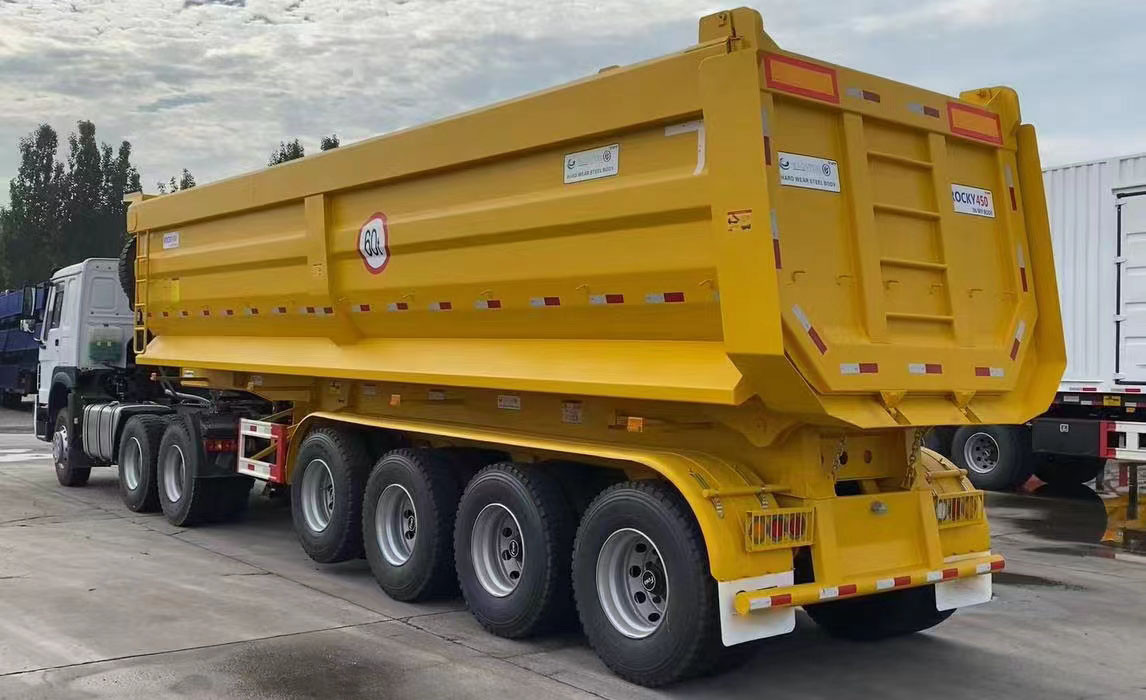
A rear dump semi trailer is a semi-trailer whose cargo box is lifted at the front by a hydraulic cylinder, tipping the load out through the rear tailgate. Typical specifications for bulk haulage models:
Core Advantages of Rear Dump Semi Trailers
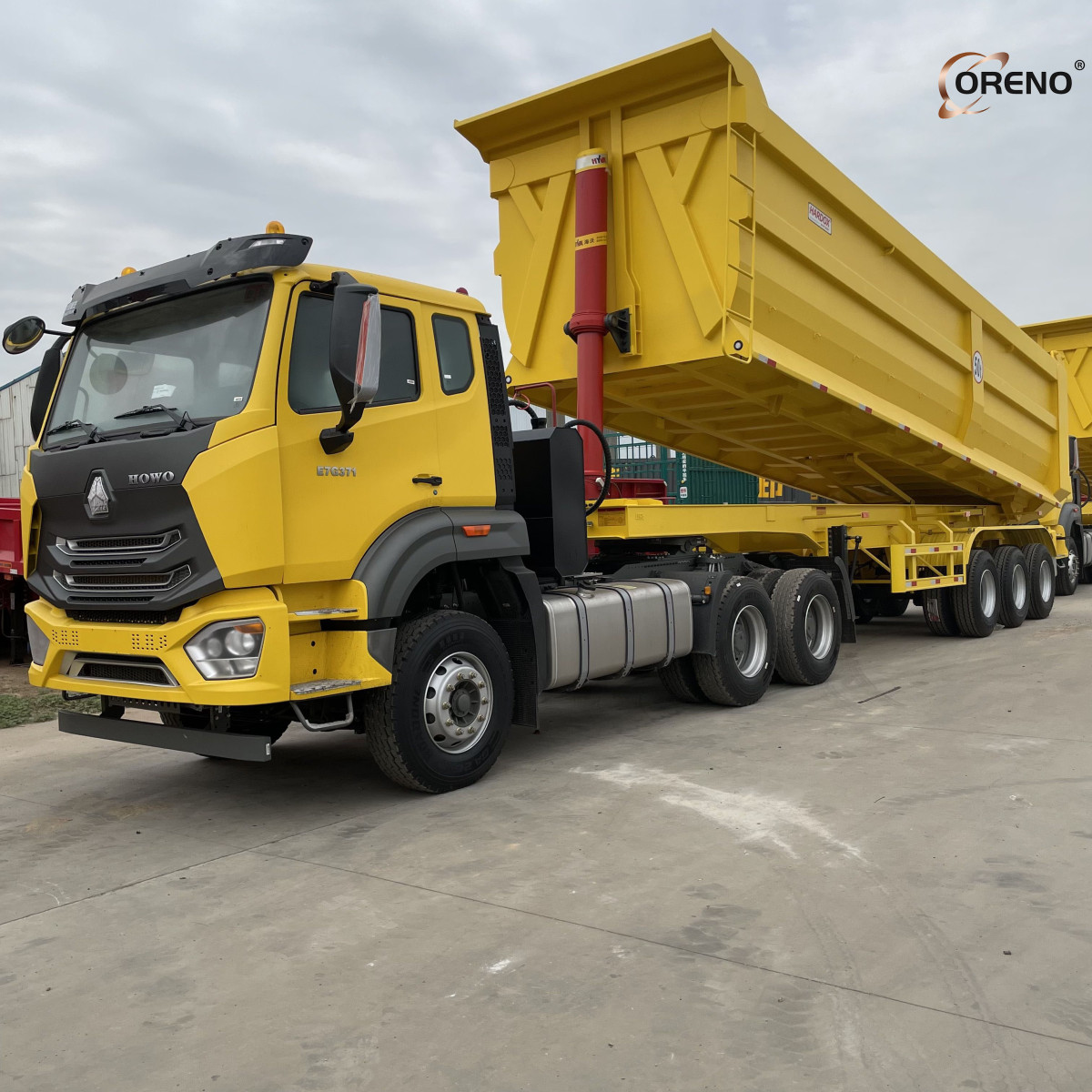
Fully automatic gravity unloading. A hydraulic cylinder tilts the cargo box 45°–55°, so a full load is discharged in minutes. This reduces labor requirements and shortens turnaround time at the unloading point.
Low material residue. The streamlined cargo box design limits material left behind, which suits wet soil, fine ore, and other loose bulk goods.
Strong, impact-resistant structure. A heavy-duty main beam and body plate resist repeated loading impact. Body plate thickness and main beam specification are the two numbers worth checking most closely.
Practical for loose bulk cargo. For sand, gravel, ore, and soil haulage, a rear dump trailer is often more practical than a flatbed or side dump configuration, because it can discharge without lifting equipment on site.
Common Application Scenarios
- Mining and quarrying — coal, ore, and rock aggregates
- Infrastructure construction — sand, gravel, asphalt, and construction waste
- Land reclamation and road engineering — earthwork and soil transportation
- Agricultural logistics — bulk grain and fertilizer transportation
The Key Components: Axle and Suspension
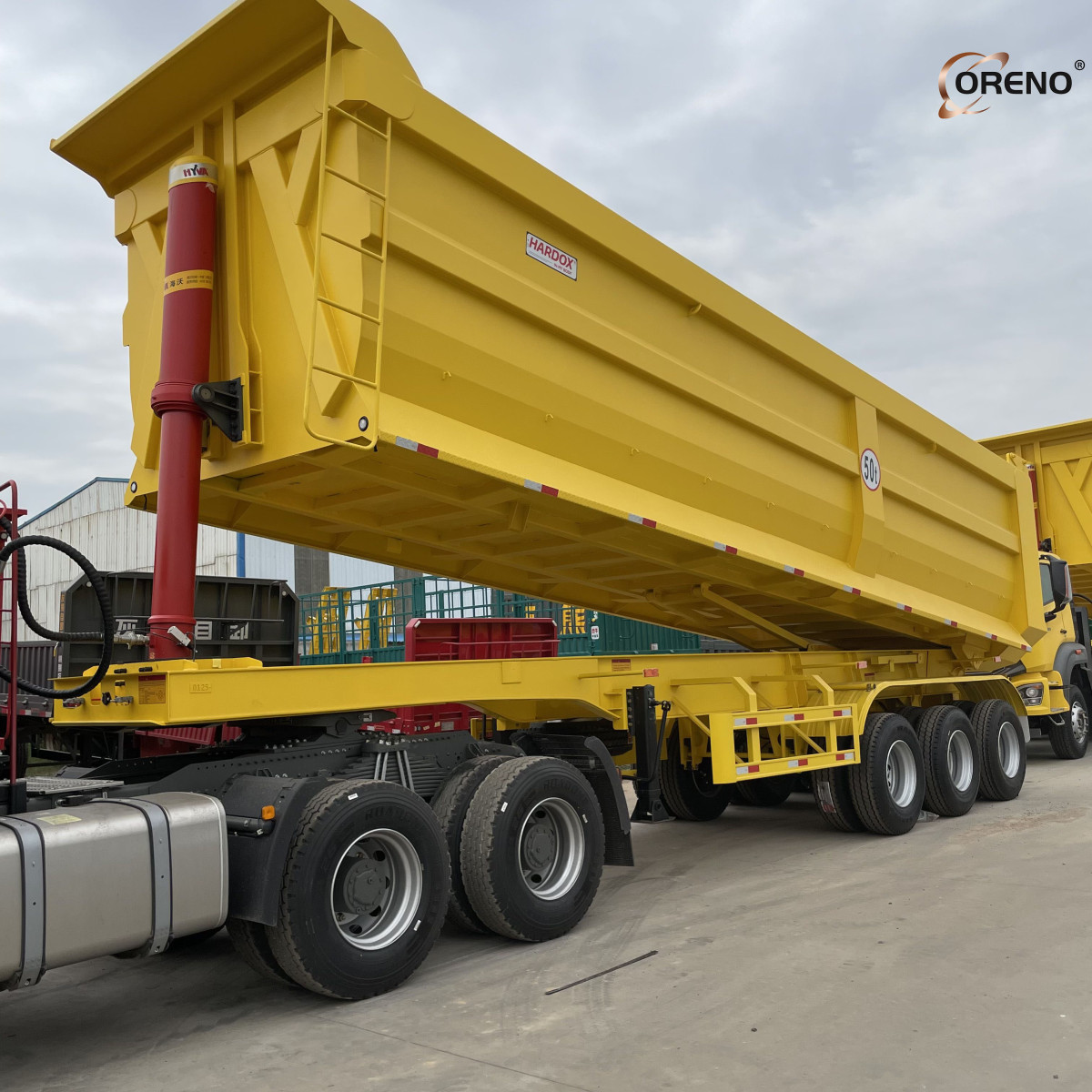
The service life and operating stability of a rear dump semi trailer depend largely on two components: the axles and the suspension system.
High-precision, heavy-duty axles and durable suspensions reduce tire wear, prevent structural deformation under repeated heavy loading, and lower long-term fleet operating costs. In practice, axles and suspensions account for a large share of unplanned downtime in heavy-haul fleets — so the specification you choose here matters more than the paint on the body.
Related components you may need:
- Semi-trailer axle assemblies — American-type and German-type options
- Trailer suspension systems — mechanical leaf spring and air suspension
- Trailer spare parts — leaf springs, brake chambers, landing gear
How to Choose the Right Rear Dump Semi Trailer
- Match axle rating to real payload. Confirm the cargo density you actually haul. A trailer rated for 60 t is not the right choice for a 95 t ore load.
- Choose the axle count for your routes. 3-axle configurations suit most road-legal bulk haulage; 4- and 6-axle configurations are used where higher payload or poor road conditions demand it.
- Pick the suspension for your road conditions. Mechanical leaf spring suspension is the common choice for rough, unpaved routes; air suspension offers a smoother ride where road quality allows.
- Check the tipping angle against body length. A longer body needs a properly matched cylinder to reach a safe tipping angle.
- Inspect body plate thickness and main beam specification. These determine how the trailer holds up after years of loading impact.
Confirm spare parts availability. Ask which axle, suspension, and brake components are stocked, and how quickly they can be shipped.

Maintenance Tips for Rear Dump Semi Trailers
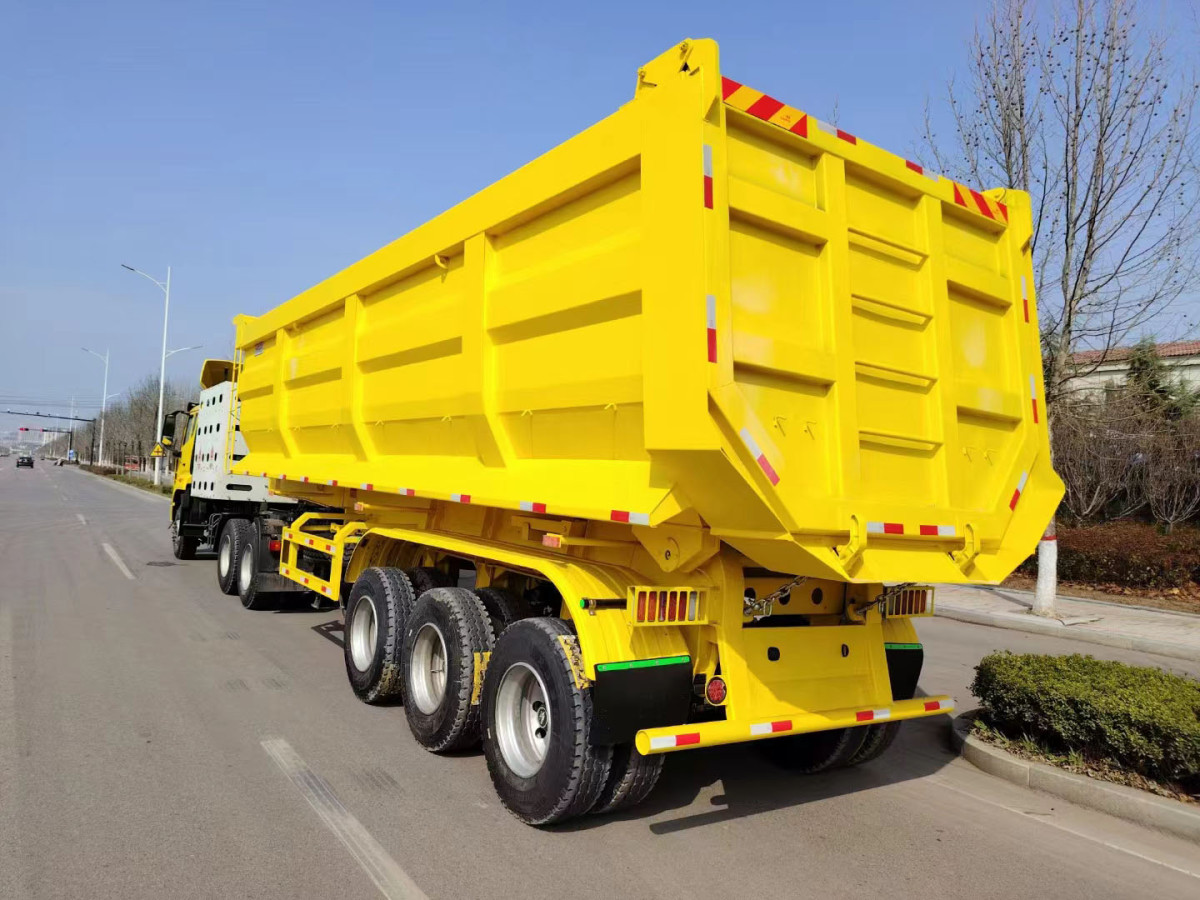
Extending service life is mostly about routine attention to the axles and suspension:
- Lubricate axle and suspension grease points on a fixed schedule
- Check fastener and U-bolt tightness after the first heavy loads, then periodically
- Monitor load distribution to avoid overloading one axle
- Inspect hydraulic cylinders and lines for leaks
Check tire pressure and wear patterns for early signs of axle misalignment
Why Work With ORENO
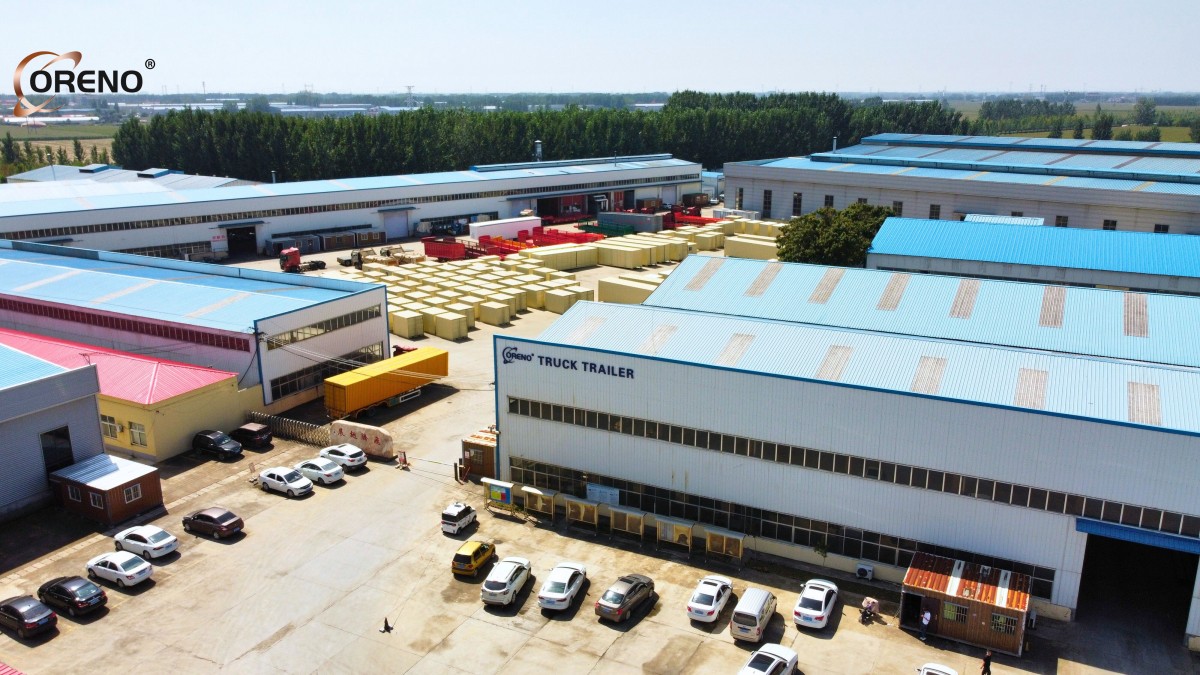
Shandong ORENO Mechanical Co., Ltd is a trailer manufacturer and parts supplier based in Liangshan County, Jining — one of China's most concentrated trailer manufacturing bases. The ORENO brand has been building trailer components for over two decades.
The company operates automated production lines with precision CNC processing equipment and multi-stage inspection, producing:
- Semi-trailer axle assemblies (American-type and German-type)
- Single-point suspension assemblies
- Supporting trailer parts
Annual capacity reaches 160,000 sets of axle assemblies and 110,000 sets of matching suspension assemblies. Products have been exported to more than 30 countries and regions, including Southeast Asia, the Middle East, South Asia, Central America, and Africa.
Frequently Asked Questions
What is the difference between a rear dump and a side dump semi trailer?
A rear dump semi trailer tips its load out through the back of the cargo box. A side dump trailer discharges to the side. Rear dump designs are the more common choice for sand, gravel, and ore haulage on construction and mining sites.
What tipping angle does a rear dump semi trailer use?
Most bulk haulage models tip between 45° and 55°, which is enough to discharge loose material cleanly without losing stability.
How many axles does a rear dump semi trailer need?
It depends on your payload and local road regulations. 3-axle configurations cover most road-legal bulk haulage; 4- and 6-axle configurations are used for heavier loads or difficult terrain.
Can the trailer be customized?
Yes. Length, body height, axle configuration, suspension type, and color can be customized. OEM and SKD/CKD cooperation are available.
What is the typical lead time?
Around 15 days for 1–3 units and about 20 days for larger orders, subject to specification.
Get a Quote
Need a rear dump semi trailer, or reliable axle, suspension, and spare part solutions for your fleet? Contact ORENO for technical support and wholesale pricing.
[Request a Quote] [Browse Trailer Axles & Suspension]
As a trailer parts factory, ORENO offers One-Stop Solution for Trailer Manufacturers.
Based on graphic design, we can customize:
- Trailer Steel frame parts: Main beams( I/H beams), side beams, cross beams, throughout plates.
- Trailer accessories: Axles, suspensions, leaf spring, landing gear and other spare parts.
Want to build a trailer factory and assemble in local?
ORENO manufactures complete Customizable semi trailers for distributors as well:
Flatbed Semi Trailer, Side Wall Semi Trailer, Fence Semi Trailer, Skeletal Semi Trailer, Lowbed Trailer, Tipper/Dump Trailer, Car Carrier Trailer, Cement Trailers.
ORENO also offers used truck trailers and axles.
Want to build a trailer factory and assemble in local?